
Substance abuse and addiction
Treatment for alcohol, drug and cocaine abuse
When alcohol, drugs or medication take up more of your life than you want, willpower alone rarely gets you there. EGOLAB offers confidential psychological treatment for alcohol abuse, drug abuse and cocaine abuse, for the person affected and for the people around them.
Alcohol · Cocaine · Drugs and medication · Relatives · Full discretion
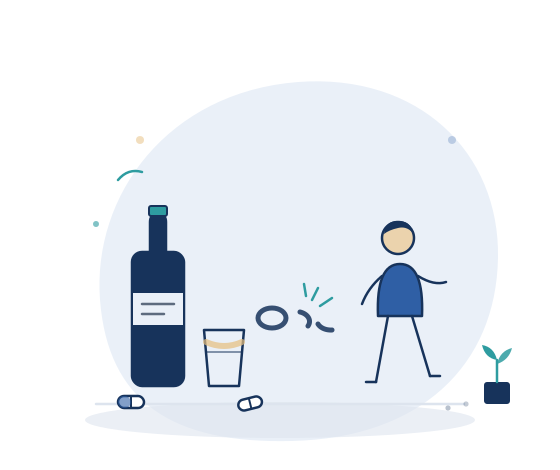
What are substance abuse and addiction?
From habit to abuse and addiction
Whether your use counts as abuse is rarely decided by how much or how often you drink or take drugs. What matters is what it does to your life. When it starts to cost you your health, your work, your finances or your closest relationships, and you carry on anyway, it has become abuse.
Addiction is when the brain's reward system has taken over: the craving comes before the decision, more is needed to achieve the same effect, and attempts to stop trigger restlessness, irritability or withdrawal symptoms. That is neither laziness nor weak character, but a condition that can be treated.
Does it have to be 'bad enough' before you seek help? No. You do not need to drink every day or to have lost anything before getting help makes sense. If your use takes up more space than you want, or if the people around you have started to worry, that is reason enough.
Do you recognise this?
Signs of alcohol and drug abuse
Signs of alcohol abuse
You drink more or more often than you intended, to relax, to sleep or to soothe unease. Perhaps you drink alone, hide your consumption or promise yourself breaks that do not last.
Signs of drug and medication abuse
Cannabis, cocaine or sedatives: what began as partying or relief has become a habit that runs your mood, your sleep and your finances. Tolerance rises, and breaks become harder to keep.
When is it addiction?
Craving and loss of control, rising tolerance, withdrawal symptoms, and use that continues despite the consequences. The more signs you recognise, the more reason to seek help.
Are you a relative?
Relatives often carry the heaviest worry, and live with guilt, anger and powerlessness of their own. We also offer sessions for you as the partner, parent or child of a person with an addiction.
Cocaine abuse
Cocaine abuse: from weekend use to addiction
In Denmark, cocaine is the most widely used illegal drug after cannabis. In the Danish Health Authority's latest survey, 2.8% of 16 to 44-year-olds had used cocaine within the past year, and among 16 to 24-year-olds the figure was 3.2%. Most do not take the drug every day. Cocaine belongs to parties, weekends and particular social circles, which is exactly why cocaine abuse tends to develop gradually, without the person noticing.
The high is short: energy, confidence and euphoria for a few minutes up to half an hour. Then comes the comedown, with restlessness, irritability, anxiety and fatigue, and the quick swing drives many to take more. That is how the pattern of several days of intense use, the so-called binges, takes hold. Cocaine is highly addictive, and the dependence is above all psychological: the craving comes before the decision, and control slips.
Signs of cocaine abuse
You take more, and more often, than you planned, and stopping is hard once you have started. Weekends turn into weekdays, you use alone or in secret, and sleep, mood and finances suffer.
Comedown and withdrawal
A period of cocaine use is typically followed by days of low mood, fatigue, irritability, poor sleep and poor concentration, along with a strong craving for more. The withdrawal is mainly psychological, but it is real, and it can last for weeks.
Anxiety, paranoia and depression
Cocaine can trigger panic attacks, suspiciousness and, at worst, psychosis, and depression is common with prolonged use. If you already live with anxiety, depression or ADHD, cocaine usually makes the symptoms worse. The two are best treated together.
Cocaine and alcohol
Cocaine is most often taken together with alcohol. The combination makes it easier to drink heavily, strains the heart and circulation, and raises the risk of poisoning. That is why we always look at your use as a whole, not just the cocaine.
Treatment of cocaine abuse at EGOLAB
There is no medication for cocaine addiction. Treatment is psychological, and that is our speciality. We begin by clarifying your motivation and your pattern: when, with whom and in which moods do you take cocaine? We then work on the situations, thoughts and feelings that trigger the craving and train concrete strategies for getting through it, using cognitive behavioural therapy and motivational interviewing among other methods.
Relapses are common in cocaine treatment. We plan for them and use them to adjust the treatment. If anxiety, depression or ADHD is part of the picture, we treat it at the same time, and relatives can be involved by agreement. Everything is confidential, with no referral needed and no long wait.
Emergency: chest pain, seizures, severe agitation or confusion after cocaine require urgent medical care. Call 112. With severe withdrawal or psychotic symptoms, a doctor or psychiatric services may need to be involved, and we help coordinate this.
Sources: Danish Health Authority, Narkotikasituationen i Danmark 2026, report 1 (SUSY 2025 data) and the Danish Health Authority guidance on the medical treatment of cocaine and other stimulant abuse (VEJ no. 76, 2012). Both in Danish.
Treatment at EGOLAB
Treatment for alcohol and drug abuse at EGOLAB
Treatment starts where you are. Perhaps you want to stop completely, perhaps you want control over your use, and perhaps you are simply unsure. Together we clarify your motivation and make a realistic plan, without moralising.
We treat alcohol and drug abuse with well-documented methods such as cognitive behavioural therapy, motivational interviewing and ACT, focusing on the situations, thoughts and feelings that trigger the craving, and on preventing relapse. Substance abuse frequently goes together with anxiety, depression, stress or ADHD, so treatment takes the whole picture into account, and an assessment can be included if needed.
Your specialist

What EGOLAB offers
How addiction treatment works at EGOLAB
Individual addiction treatment
Confidential sessions with our specialist, focusing on your use, your motivation and a plan that holds up in everyday life.
Relapse prevention
Get to know your risk situations and gain concrete strategies for handling cravings, also when it gets hard.
Support for relatives
Sessions for partners, parents and adult children, about boundaries, worry and how to look after yourself along the way.
Assessment and dual diagnosis
When substance abuse and mental-health struggles interact, we map the whole picture before treating. Read more →
The first step
You do not have to wait for it to get worse
Shame and silence are addiction's best friends, and the biggest barrier to seeking help. With us you will find an experienced specialist, full confidentiality and a plan built around your life, and no judgement.
Please note: with severe physical dependence, detoxification and withdrawal treatment may require medical care. We help coordinate this, so that the talking therapy rests on a safe foundation.
Full discretion
All treatment is covered by professional confidentiality. You need no referral and no diagnosis to start, only the will to talk to someone about it.
FAQ
Frequently asked questions about addiction treatment
What is the difference between substance abuse and addiction?
Abuse is use that harms your health, your work or your relationships without you stopping. Addiction is when craving and loss of control have taken over, tolerance rises, and you get withdrawal symptoms or restlessness when you pause. Both can be treated, and you do not have to wait until it has become addiction.
Do I need a referral for addiction treatment at EGOLAB?
No. You can start without a referral and without a diagnosis. Write or call, and we will find you an appointment, usually within a week. Sessions take place in our clinics or online, in English.
What does treatment for alcohol or drug abuse cost?
A 45-minute consultation costs DKK 1,200. See all prices and prepaid packages on our prices page. Some health insurance policies cover psychological treatment, so check with your insurer before you begin.
Can I get help if I do not want to stop completely?
Yes. Many people start out wanting control over their use rather than wanting to stop. We work from your goal and adjust along the way if it turns out that stopping altogether is what works for you.
Do you treat cocaine abuse?
Yes. Cocaine abuse is treated psychologically, since there is no medication for cocaine addiction. We work on craving, risk situations and relapse, and treat anxiety, depression or ADHD at the same time if they are part of the picture. Read more in the section on cocaine abuse.
Is addiction treatment with a psychologist confidential?
Yes. Psychologists are bound by professional confidentiality, and your treatment is not registered with the municipality or your employer. You can write to us encrypted through the contact form, and you decide who gets to know that you are in treatment.
Can relatives get help?
Yes. We offer sessions for partners, parents and adult children about boundaries, worry and looking after yourself while someone you love has an addiction. That person does not need to be in treatment with us.
Contact
Contact us about addiction treatment
Write briefly, whether it concerns yourself or a relative, and whether it is about alcohol, cocaine, other drugs or medication. You will receive a confidential reply within 24 hours. You are welcome to call +45 4245-4600.